Best DEET-Free Insect Repellents for Container Gardens

Five insect repellents ranked for balcony and patio gardeners, with two genuinely DEET-free picks up top and honest notes on the three that still use DEET or picaridin.

By Saul MontgomeryUpdated 15 min read
On this page
- Best DEET-free insect repellent for container gardening at a glance
- How I screened this shortlist and what got cut
- What DEET-free actually means for your plants
- 1. Repel Plant-Based Lemon Eucalyptus Mosquito & Insect — Best overall
- 2. Cutter Lemon Eucalyptus Mosquito & Insect Repellent Spray — Best budget pick
- 3. Sawyer Products SP5432 Picaridin Insect Repellent Spray — Most versatile
- 4. OFF! Deep Woods Dry Insect & Mosquito Repellent Bug Spray — Best for families
- 5. Ben's Tick & Insect Repellent Eco-Spray — Best upgrade
- Oil of lemon eucalyptus vs picaridin vs DEET: which fits a container garden?
- How long does a 4 oz bottle really last on a balcony?
- What the listings do not tell you about spraying near edibles
- The verdict
- FAQ
The best DEET-free insect repellent for container gardening is Repel Plant-Based Lemon Eucalyptus Mosquito & Insect Repellent, a 4 oz spray sold as a pack of 4 that Repel says protects for up to 6 hours per application. If you only need one bottle to test on a small patio, Cutter Lemon Eucalyptus Mosquito & Insect Repellent covers the same oil of lemon eucalyptus active in a single 4.64 oz bottle at the lowest price position in this set.
Here is the honest framing before you read further. A bad pick in this category is not "it did not work." It is realising, three sprays in, that the bottle you grabbed is a 25% DEET aerosol you did not want on the hand that pinches basil. Two of the five products below are genuinely DEET-free. The other three are strong repellents that belong in a different bag.
Best DEET-free insect repellent for container gardening at a glance
| Pick | Active ingredient | Size | Price |
|---|---|---|---|
Best overall Repel Plant-Based Lemon Eucalyptus |
Oil of lemon eucalyptus, DEET-free | 4 fl oz, pack of 4 | Check Price |
Best budget pick Cutter Lemon Eucalyptus |
Oil of lemon eucalyptus, DEET-free | 4 fl oz, single bottle | Check Price |
Most versatile Sawyer Picaridin Spray |
20% picaridin, not DEET-free labelled as such | 3 fl oz, pack of 2 | Check Price |
Best for families OFF! Deep Woods Dry |
25% DEET | 4 oz, pack of 2 | Check Price |
Best upgrade Ben's Tick & Insect Eco-Spray |
30% DEET | 6 fl oz, pack of 2 | Check Price |



How I screened this shortlist and what got cut
Three filters shaped this list, and each one cut real candidates.
- DEET status stated on the listing. Two products here are described in the listing as DEET-free formulas: Repel Plant-Based Lemon Eucalyptus and Cutter Lemon Eucalyptus. Anything sold as "natural" without naming an active ingredient did not make the cut.
- A repellent, not a plant treatment. Container gardening sits at the border between personal repellents and horticultural sprays. This roundup is about repellent you put on skin or clothing before you tend the pots, not neem oil for the leaves.
- A usable size for on-and-off garden sessions. Every product here ships in 3 to 6 fl oz bottles. Concentrates that need dilution and lawn-scale foggers were cut.
Three products cleared the DEET-free bar and made the shortlist, so I kept two picaridin and DEET options as reference points. A shopper deserves to see what the alternatives offer, and how the trade-off changes when you step outside the strictly DEET-free lane.
The category is small on purpose. Insect repellent is not a category to over-pick; two strong DEET-free bottles and three reference points is a better shortlist than ten near-duplicates.
What DEET-free actually means for your plants
DEET-free is a claim about the product, not a promise about your tomatoes. It means the repellent does not contain N,N-diethyl-meta-toluamide as the active ingredient. It does not mean the spray is food-safe, plant-safe, or edible-crop-approved. Read the label on any bottle you buy, and follow the directions on where and how to apply it.
For container gardening specifically, the reason people search for DEET-free is usually one of three:
- DEET can damage certain plastics and synthetic coatings. Container gardens are full of plastic pots, drip tubing, and coated stakes. A DEET overspray on a nylon watering wand is not the end of the world, but it is a real, documented material concern.
- You are handling edible leaves shortly after spraying your hands. Herbs, salad greens, cherry tomatoes on a balcony rail. You want the option to rinse and move on without second-guessing.
- Personal preference, scent, or sensitivity. Some people simply prefer a plant-based active ingredient in the same way some prefer plant-based sunscreen.
Sawyer's own listing calls out that its picaridin formula "won't damage plastics or synthetic coatings." That is a helpful hint about why gardeners often reach past DEET, whatever the ingredient they end up choosing.
1. Repel Plant-Based Lemon Eucalyptus Mosquito & Insect — Best overall
The DEET-free winner here on the strength of a genuinely plant-based active ingredient and a four-bottle pack that lasts a full season on a balcony.
Best for: balcony gardeners who want a plant-based active ingredient and a multi-bottle pack Skip it if: you need a single small bottle for occasional use
Repel is one of only two picks in this set with a DEET-free formula, and it ships four 4 fl oz bottles in the box. Repel says the active is oil of lemon eucalyptus and that a single application protects for up to 6 hours, which lines up neatly with a long morning of repotting followed by a second application in the evening. The bottles measure 5.68 x 2.11 x 1.26 in, small enough to leave one by the door, one in the shed, one in the go-bag, and one in reserve. Model number HG-94315. Repel also says the finish is not greasy or sticky, and carries a cool scent rather than the usual bug-spray smell.
The trade-off is the price position, which is the highest of the five picks here, and the fact that only two sellers list it. If you want to try the ingredient before committing to four bottles, the Cutter pick below uses the same active in a single bottle at the lowest price position in the set.
Pros:
- DEET-free oil of lemon eucalyptus active ingredient
- Ships as a pack of 4 bottles, 4 fl oz each
- Repel says up to 6 hours per application
- Compact 5.68 x 2.11 x 1.26 in bottle
- No greasy or sticky finish, per the listing
Cons:
- Highest price position of the five picks
- Only two sellers list this pack
- No stated shelf life on the listing
2. Cutter Lemon Eucalyptus Mosquito & Insect Repellent Spray — Best budget pick
The cheapest way into the same DEET-free active ingredient as the winner, in a single 4 fl oz bottle.
Best for: renters trying a DEET-free repellent for the first time on a small patio Skip it if: you want more than one bottle in the box
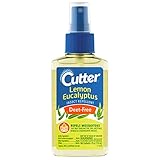
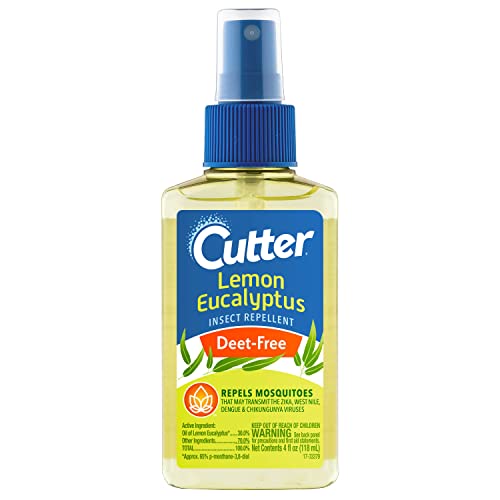
Cutter is the second DEET-free pick and sits at the lowest price position in this set. The 4 fl oz bottle weighs 4.64 oz and measures 5.68 x 1.26 x 2.11 in, essentially the same footprint as the Repel bottle. Cutter says the active ingredient comes from the leaves of the lemon eucalyptus tree, that the spray lasts up to 6 hours, and that you reapply once daily as needed, up to twice per day. Model HG-96014.
The reason this is the budget pick and not the overall winner is straightforward: you get one bottle, not four. For someone with a small balcony who spends a couple of evenings a week among their pots, one 4 fl oz bottle may last the whole growing season. For someone who reaches for the spray every time they step outside, the Repel pack of four is the better math. The active ingredient is the same category on both listings, so the choice really is about how much you will use.
Pros:
- Lowest price position of the five picks
- DEET-free oil of lemon eucalyptus active
- Cutter says up to 6 hours per application
- Compact 4.64 oz single bottle
- Cutter says clean lemon eucalyptus scent, not greasy
Cons:
- Only one bottle in the pack
- No stated shelf life on the listing
- No dimensions advantage over the pack-of-four alternative
3. Sawyer Products SP5432 Picaridin Insect Repellent Spray — Most versatile
The best-selling pick in this set, and the one to reach for if you want a non-DEET active that is not oil of lemon eucalyptus.

Best for: gardeners who also hike, fish or camp and want one spray for everything Skip it if: you specifically want a DEET-free and picaridin-free active ingredient
Sawyer is the one buyers choose most often in this set and it has the lowest sales rank of the five. It uses 20% picaridin rather than DEET, which puts it in the same "not DEET" conversation without being labelled DEET-free the way the Repel and Cutter picks are. Sawyer says picaridin is fragrance-free, dries quickly, and "won't damage plastics or synthetic coatings," which is the specific concern gardeners raise about DEET around pots and drip lines. The listing claims up to 12 hours against mosquitoes and ticks, up to 8 hours against flies. The bottles are 3 fl oz in a pack of 2, 5 x 3 x 3 in, and Sawyer states a shelf life of 5+ years, the only stated shelf life in this roundup.
The reason it lands at three and not higher is the keyword. If DEET-free is your line, picaridin is a different active and you should know that going in. If your line is "not DEET," this is arguably the most versatile bottle here.
Pros:
- Longest claimed duration in the set
- Only pick with a stated 5+ year shelf life
- Fragrance-free per the listing
- Sawyer says it does not damage plastics
- The one buyers choose most often here
Cons:
- Picaridin, not the DEET-free active gardeners often want
- Smallest bottle size at 3 fl oz
- Pump spray only, no aerosol option in this listing
4. OFF! Deep Woods Dry Insect & Mosquito Repellent Bug Spray — Best for families
A dry-feel aerosol at the entry price band, but 25% DEET and therefore not a DEET-free option.

Best for: households who already trust the OFF brand and want a dry-feel aerosol Skip it if: you came here because you want DEET-free, since this is 25% DEET
OFF! Deep Woods Dry is included here as a reference. It is 25% DEET, so it does not meet the DEET-free brief, but shoppers often compare it side by side with the Repel and Cutter picks and deserve to see the honest contrast. The pack is two 4 oz aerosol cans, 6.4 x 1.81 x 3.63 in, weighing 0.82 lb, model 630389, released in 2016. OFF! says the aerosol goes on powder-dry and does not stain, which is the appeal for families with kids in and out of the pots all afternoon.
For container gardening specifically, 25% DEET is a lot of DEET to have near plastic pots, coated stakes, and drip tubing. If a family member reacts poorly to plant-based actives, this is a well-known aerosol at the entry price band with two cans in the box. That is the case for it. The case against it, for this roundup, is straight in the title of the search you ran.
Pros:
- Entry price band, second-cheapest of the five
- Aerosol delivery for wide coverage
- OFF! says powder-dry finish
- Pack of two 4 oz cans
- Longstanding branded formula on the market since 2016
Cons:
- 25% DEET, not DEET-free
- Aerosol can drift onto nearby foliage in the wind
- DEET can affect certain plastics and coatings
5. Ben's Tick & Insect Repellent Eco-Spray — Best upgrade
A higher-DEET pick for gardeners who also step off the patio into wooded, tick-prone ground.

Best for: gardeners heading into wooded lots or tick country after their container work Skip it if: you want a plant-based active ingredient or the lowest price position
Ben's is here for the reader whose container garden sits on the edge of a wooded lot, or who tends pots in the morning and hikes in the afternoon. It is 30% DEET, the highest DEET concentration of the five, in a 6 fl oz bottle sold as a pack of 2. Ben's says the formula is water-based, free from additives and alcohol, and gives up to 7 hours of protection. The Eco-Spray bottle sprays at any angle, which the listing highlights for continuous fine-mist coverage.
For strict container gardening on a balcony, this is more repellent than you need and further from the DEET-free brief than any other pick. As an upgrade for a specific second use case, though, it earns a place. The trade-off it makes against the rest of the set is the strongest: it is not DEET-free, it has the fewest published specifications of the five, and it sits at the second-highest price position. It is on this list because the reader who tends pots on a wooded property genuinely needs to know it exists.
Pros:
- Largest bottle size at 6 fl oz
- Pack of two bottles
- Ben's says up to 7 hours of protection
- Water-based formula per the listing
- Any-angle Eco-Spray delivery
Cons:
- 30% DEET, furthest from the DEET-free brief
- Fewest published specifications in the set
- Slowest-selling pick of the five here
- No stated shelf life on the listing
Oil of lemon eucalyptus vs picaridin vs DEET: which fits a container garden?
Three actives, three profiles. Here is the plain-language cut.
- Oil of lemon eucalyptus (Repel, Cutter). Plant-derived, labelled DEET-free on both listings, cool lemon scent. Both listings claim up to 6 hours per application. This is the active most gardeners searching "DEET-free" have in mind.
- Picaridin (Sawyer). Not DEET, not oil of lemon eucalyptus. Fragrance-free, and Sawyer says it does not damage plastics or synthetic coatings, which is the specific worry gardeners have about DEET on pots and drip lines. The longest claimed duration in this set.
- DEET (OFF!, Ben's). The most established active ingredient by decades of retail presence, at 25% and 30% concentrations respectively in this set. If you were looking for DEET-free, these are here as reference points, not recommendations.
The deciding question is not "which active is strongest" but "which active fits how you use it." A balcony gardener who steps out to prune basil for ten minutes has different needs than a homesteader with raised beds at the edge of the treeline. The Repel pack wins overall because the plant-based active is what the keyword asks for and the four-bottle pack matches the way container gardeners actually use spray: a little at a time, over many months.
How long does a 4 oz bottle really last on a balcony?
I cannot tell you exactly, and neither can the listings. What I can do is stack the specifications and give you a way to estimate.
A 4 fl oz spray bottle is roughly 118 ml. A typical trigger sprayer dispenses about 1 ml per pump. So a 4 fl oz bottle carries a rough order of a hundred-plus sprays. If a full arms-and-neck application is eight to twelve sprays, you get somewhere in the range of ten to fifteen applications per bottle.
- One bottle, one application per garden session, two sessions per week: about six to eight weeks of use.
- One bottle, two applications per session, four sessions per week: about two to three weeks.
- The Repel pack of four, at the same rates: roughly a full growing season on a balcony.
That is why the pack size matters more than a shopper first thinks, and why Repel's four-bottle pack is the overall pick. For a small patio and occasional use, one Cutter bottle is enough. For anyone who is out among the pots most days from spring through autumn, the pack of four does the math you would otherwise do reluctantly at the checkout.
What the listings do not tell you about spraying near edibles
Three things the product pages will not spell out, and that a container gardener needs to think about anyway.
- Apply the repellent away from your plants. Spray in a hallway, an entryway, or over grass, not directly over an open lettuce pot. This is common sense that the listings do not print because they are personal repellents, not horticultural sprays.
- Wash your hands before harvest. Even a plant-based active is a formulated product. If you spray your forearms and then pinch basil, rinse first.
- Store bottles out of direct sun and heat. None of the five listings state a heat tolerance, and only Sawyer states a shelf life at all, at 5+ years. A hot balcony ledge in July is not a storage spot.
None of this is dramatic. It is the difference between a repellent that stays in the gardening kit for years and one you replace mid-season because it lived on the sunny railing.
The verdict
Repel Plant-Based Lemon Eucalyptus Mosquito & Insect Repellent is the pick for container gardening because it does the two things the keyword asks: a genuinely DEET-free formula built on oil of lemon eucalyptus, and enough volume across four 4 fl oz bottles to last a real growing season on a real balcony. Repel says up to 6 hours per application, which lines up with the way most container gardeners actually spend time among their pots: an hour or two in the morning, an hour again in the evening.
Two conditions flip the pick. First, if you have never used oil of lemon eucalyptus before and want to try one bottle at the lowest price position in this set, choose Cutter Lemon Eucalyptus Mosquito & Insect Repellent Spray. Same active category, single 4 fl oz bottle, honest entry point. Second, if your line is "not DEET" rather than strictly DEET-free, Sawyer Products SP5432 Picaridin Insect Repellent Spray is the best deet free insect repellent for container gardening alternative to consider, with a stated shelf life of 5+ years and Sawyer's claim that picaridin does not damage plastics or synthetic coatings.
Skip the two DEET picks unless a specific second use case, like a wooded property line or tick country, brings you to them.
FAQ
Is the best deet free insect repellent for container gardening safe to use on edible plants?
The best deet free insect repellent for container gardening is a personal repellent, not a plant treatment. Do not spray it on edible leaves, herbs, or vegetables in your pots. Apply it to skin or clothing away from the plants, let it dry, then work in the garden. Wash your hands before harvesting basil, salad greens, or cherry tomatoes. Neither Repel nor Cutter list edible-crop application on their pages.
Is Repel Plant-Based Lemon Eucalyptus worth it over the single Cutter bottle?
Repel Plant-Based Lemon Eucalyptus is worth it over the single Cutter bottle when you use repellent often. The Repel pack ships four 4 fl oz bottles versus Cutter's one 4 fl oz bottle. If you spray a couple of evenings a week on a small balcony, one Cutter bottle likely lasts the season. If you are out among your pots most days, the Repel pack does the math for you upfront.
How long does the oil of lemon eucalyptus in these picks last per application?
The oil of lemon eucalyptus in these picks lasts, per Repel and Cutter's own listings, up to 6 hours per application. Both brands list the same protection window. Cutter adds that you can reapply once daily as needed, up to twice per day. That means a bottle applied morning and evening covers a full container-garden day, from early watering through late-evening deadheading of spent blooms.
Sawyer picaridin vs Repel lemon eucalyptus: which for a container garden?
Sawyer picaridin vs Repel lemon eucalyptus comes down to your definition of "DEET-free." Repel is labelled DEET-free and uses a plant-based active. Sawyer is picaridin, which is not DEET but is not oil of lemon eucalyptus either. Sawyer claims up to 12 hours against mosquitoes and a 5+ year shelf life, and says it does not damage plastics. If strictly plant-based matters, choose Repel. If duration matters, choose Sawyer.
What is the biggest mistake gardeners make choosing an insect repellent?
The biggest mistake gardeners make choosing an insect repellent is grabbing a familiar brand at the store without checking the active ingredient. OFF! Deep Woods Dry is 25% DEET. Ben's Eco-Spray is 30% DEET. Both are effective repellents, but neither is DEET-free, and both can affect plastics used in pots and drip tubing. Read the active ingredient line first, then decide.
Start with the Repel pack of four if you know DEET-free is your requirement and you tend containers most days of the week. Move to the single Cutter bottle if a smaller commitment feels right for a first season on a balcony. Reach for Sawyer only if picaridin fits your definition of "not DEET" and you want a spray that carries into hiking and fishing too. The two DEET aerosols are honest options for a different reader, one whose garden ends at a wooded property line. For everyone else searching for a repellent that fits the plants in the pots, the plant-based active is the correct starting point, and the pack of four is what turns a single decision into a season of easy answers.