Best End Cutting Pliers: Bates Leads the Six
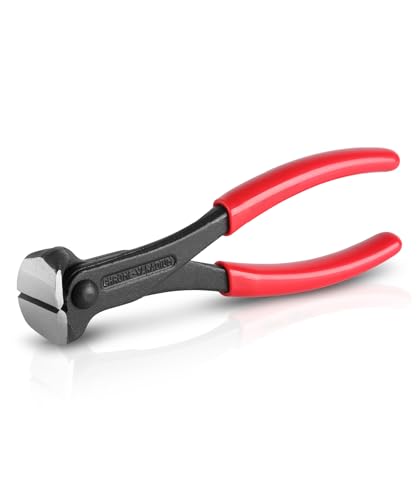
A ranked comparison of six end cutting pliers, from a 2.08 oz Billbotk for hobby work up to KNIPEX and IRWIN for daily site use, with the specification that actually decides the buy.

By Saul MontgomeryUpdated 15 min read
On this page
- Best end cutting pliers at a glance
- How I narrowed six pliers from a crowded listing
- Jaw hardness is what really decides this
- 1. Bates Choice 7" Nail Puller — Best overall
- 2. KNIPEX 68 01 160 End Cutters — Runner-up
- 3. IRWIN VISE-GRIP End Cutting Pliers — Best premium
- 4. HOUSERAN 8" End Cutting Pliers — Best for pros
- 5. DURATECH 7" Nail Puller — Best minimal setup
- 6. Billbotk Jewelry End Cutting Pliers — Best budget pick
- Which length suits the job in front of you?
- What the listings do not tell you
- Are these actually the right tool for pulling nails?
- The verdict
- FAQ
The best end cutting pliers here are the Bates Choice 7-inch nail puller, a 6.38 oz high-carbon-steel tool built for carpenters yanking nails out of subfloor and trim. If you want a limited lifetime warranty and induction-hardened edges at roughly 61 HRC, the KNIPEX 68 01 160 is the better call. The rest of this set splits by length, jaw hardness and how much cutting versus pulling you actually do.
Best end cutting pliers at a glance
| Pick | Length | Weight | Jaw claim | Price |
|---|---|---|---|---|
Best overall Bates Choice 7" Nail Puller |
7 in | 6.38 oz | High-carbon steel | Check Price |
Runner-up KNIPEX 68 01 160 End Cutters |
6.35 in | 7.28 oz | ~61 HRC, induction hardened | Check Price |
Best premium IRWIN VISE-GRIP End Cutting Pliers |
8 in | 4.8 oz | Nickel chromium, induction hardened | Check Price |
Best for pros HOUSERAN 8" End Cutting Pliers |
8 in | 1.32 lb | 63 to 65 HRC claim, Cr-V | Check Price |
Best minimal setup DURATECH 7" Nail Puller |
7.2 in | 0.73 lb | CRV, TPR handle | Check Price |
Best budget pick Billbotk Jewelry End Cutting Pliers |
7.48 in | 2.08 oz | Polished jaws, no grade stated | Check Price |


How I narrowed six pliers from a crowded listing
The Amazon listings for end cutting pliers run into the hundreds, and most of them repeat the same three photos with different logos. I cut the field down using only the published product data, not marketing bullets. Three tests did most of the work.
- Is the jaw material named? A tool sold as "steel" with no grade is a tool I cannot compare. Bates, DURATECH, HOUSERAN, KNIPEX and IRWIN all name a specific material. Billbotk is the exception, and it earned its slot as the entry pick rather than the workshop pick.
- Is the length or weight published? Every tool that survived carried both a length and a weight figure in the listing, so a reader can judge whether it fits a nail apron or a jewellery drawer.
- Does anything back the claims? A warranty, a stated jaw hardness in HRC, or a named steel grade counts. Only KNIPEX publishes a limited lifetime warranty in this set, and only HOUSERAN and KNIPEX publish a specific HRC figure.
That screening left six pliers that split cleanly by size. Two are 7-inch nail pullers built around subfloor and trim work. Two are 8-inch pliers with wider throats for cutting nails and rivets. One is a compact 6.35-inch KNIPEX for tight work on wire. One is a light 2.08 oz jewellery tool. Every pick below is graded against the other five, not against the wider category.
Jaw hardness is what really decides this
Most best end cutting pliers guides compare handle colour and grip material. That is not what decides it. Jaw hardness is.
End cutting pliers work by pinching a nail head or a wire between two short, opposing edges and levering it out or shearing it off. If the jaw metal is softer than what you are cutting, the edges dent, the tool loses its bite, and every subsequent cut is worse. That is why the HRC number, when a manufacturer publishes one, matters more than any other spec on the listing.
Two picks here publish an HRC figure. HOUSERAN claims 63 to 65 HRC on chrome vanadium. KNIPEX states cutting edges induction hardened to approximately 61 HRC. Bates says high-carbon steel with no HRC figure. DURATECH says CRV without a hardness. IRWIN says nickel chromium with induction-hardened cutting edges but no HRC number. Billbotk names no grade at all.
The practical read: if you are shearing hardened wire, buy from a maker who publishes the hardness. If you are pulling nails out of pine, high-carbon steel is enough and the extra hardness will not earn its price position.
1. Bates Choice 7" Nail Puller — Best overall
A light, high-carbon-steel 7-inch nail puller that does the two jobs most buyers actually need.
Best for: carpenters, flooring installers and handymen who want a light 7-inch nail puller they can keep in an apron pocket. Skip it if: you want a stated jaw hardness in HRC or a published warranty.
Bates puts the strongest all-round case together here. The listing gives you a 7-inch length, a 6.38 oz weight and a 0.1 x 7 x 7 in footprint, so it is the lightest full-size plier in this set by a clear margin. That matters when the tool spends the day hanging off a belt or being fished out of a pocket between nails. Bates describes the head as high-carbon steel with a plastic-coated grip, and pitches it as a dual-use tool for cutting wires or pulling nails. Sales rank puts it fourth-most-popular in the group as well, so the price position is doing real work.
The trade-off is transparency. Bates does not publish a jaw hardness figure, so you are taking their word that the steel will hold an edge against a bent 16d nail. There is no stated warranty either, where KNIPEX gives you a limited lifetime. As the second-cheapest of the six, that is a fair swap for most home and light-site work.
Pros:
- Lightest full-size plier here at 6.38 oz
- High-carbon steel head, plastic-coated grip
- Second-cheapest pick, entry-tier position
- 7-inch length fits an apron pocket
- Pitched squarely at nail pulling and wire cutting
Cons:
- No published jaw hardness in HRC
- No stated warranty
- Only one seller listed
- Steel grade named only as "high carbon"
2. KNIPEX 68 01 160 End Cutters — Runner-up
The only pick with a published limited lifetime warranty and a stated 61 HRC cutting edge.

Best for: tradespeople who want a warranty behind the tool and a specified edge hardness for cutting soft and hard wire. Skip it if: you need the cheapest possible option for a one-off job.
KNIPEX is the reason a lot of shoppers stop reading roundups and just buy German. The listing publishes a cutting-edge hardness of approximately 61 HRC, describes the edges as induction hardened, and states a limited lifetime warranty. None of the other five picks carry all three of those. At 7.28 oz and 1 x 6.35 x 2 in, it is the most compact full-strength tool in the set: shorter overall than the two 8-inch picks, so it lives more happily in a tight electrical box or panel.
The listing also notes suitability for twisting and cutting binding wire, which flags this as a rebar and tie-wire tool as much as a nail puller. The catch is the price position. KNIPEX sits in the premium band, second only to IRWIN by price rank in this set, and sells slower than any of the entry or mid-tier picks. If a warranty and a named HRC figure are not on your must-have list, the money you save with Bates buys a lot of nails.
Pros:
- Only pick here with a limited lifetime warranty
- Cutting edges induction hardened, ~61 HRC stated
- Compact 6.35 in length for tight spaces
- Rated by the listing for soft and hard wire
- Also suited to twisting binding wire
Cons:
- One of the two most expensive picks
- Slower-selling than the entry-tier options
- Shorter length gives less leverage than 8-inch picks
- Single seller listed
3. IRWIN VISE-GRIP End Cutting Pliers — Best premium
An 8-inch nickel-chromium plier with a wide throat aimed at cutting nails and rivets.

Best for: electricians and maintenance workers who want an 8-inch cutter for nails, rivets and cushioned grips. Skip it if: you mostly cut fine wire or work with jewellery findings.
The IRWIN 2078318 is the longest pick here at 11.2 x 4.17 in overall, and at 4.8 oz on the listing it is remarkably light for that footprint. Nickel-chromium steel is the stated construction, with induction-hardened cutting edges and what IRWIN calls ProTouch grips. The single most useful published detail is the wide throat clearance, which the listing pairs with semi-flush cutting of nails and rivets. That is the shape you want when you have to get the jaws behind a proud finish nail rather than on top of it.
The compromise is the price position: IRWIN sits at the top of the price rank in this set, and it is the slowest seller of the six. It also does not publish an HRC figure, so on hardness alone HOUSERAN's claim looks higher on paper. What you are paying for is the wider throat and the brand's own long-standing model line, which is where a lot of buyers eventually land.
Pros:
- Wide throat clearance for semi-flush cuts
- Nickel-chromium steel with induction-hardened edges
- ProTouch cushioned grips
- Light for an 8-inch tool at 4.8 oz
- Long-running IRWIN model number
Cons:
- Most expensive of the six
- No published HRC figure
- Slowest seller in this set
- No stated warranty on the listing
4. HOUSERAN 8" End Cutting Pliers — Best for pros
The hardest published jaws in this set, claimed at 63 to 65 HRC on chrome vanadium.

Best for: site workers who want the highest published jaw hardness figure and a longer 8-inch lever. Skip it if: you want a warranty on paper or a lighter tool.
HOUSERAN is the only pick that puts a specific hardness number on chrome vanadium: 63 to 65 HRC. That is above the KNIPEX figure of approximately 61 HRC, though only KNIPEX's number is qualified as an induction-hardened cutting edge specifically. HOUSERAN's stated hardness is a brand claim on Cr-V steel, so read it as an ambitious spec rather than a guarantee. The listing describes precision flush cuts, a soft-grip handle and use as flush-cut end nippers, which fits the flooring and staple-removal use it is pitched at.
At 1.32 lb, this is the heaviest of the six by a wide margin, and the 8-inch length gives you more leverage than any of the 7-inch picks. Two sellers stock it, which is more than any other pick here, so it is one of the easier ones to actually get hold of on a bad delivery day. The downside is that HOUSERAN publishes no warranty and no HRC test standard.
Pros:
- Highest published jaw hardness in this set, 63 to 65 HRC claim
- Chrome vanadium steel with anti-rust finish
- 8-inch length gives more leverage
- Two sellers listed, more than any other pick
- Soft-grip, non-slip handle
Cons:
- Heaviest pick at 1.32 lb
- No published warranty
- HRC figure is a manufacturer claim, not a test standard
- Least known brand of the three specification-forward picks
5. DURATECH 7" Nail Puller — Best minimal setup
A CRV 7-inch plier with a soft TPR handle for occasional pulling and light wire work.

Best for: DIYers who want a CRV 7-inch plier with a soft handle and do not need a warranty on paper. Skip it if: you want a named steel grade backed by a stated HRC figure.
DURATECH lands in the middle of this set in almost every dimension. The listing gives you a 7.2-inch length, a 0.73 lb weight and CRV construction, with an injection-moulded TPR handle. The manufacturer bullet mentions a blade hardness of 63 to 65 HRC as well, though that figure sits inside a marketing bullet rather than a specification field, which is a softer form of the same claim HOUSERAN makes. Treat it as a promise rather than a certified test.
Between Bates and DURATECH, the choice is straightforward. Bates is lighter and cheaper. DURATECH is heavier but adds a soft-grip handle and a slightly longer body, which some users prefer for extended pulling sessions. Sales rank puts DURATECH well behind Bates in this set, so most buyers are still landing on the Bates listing first. If the softer handle matters to you, it is worth the step up. If not, save the money.
Pros:
- CRV construction with polished, blackened finish
- Injection-moulded TPR handle
- Rated for nail pulling and wire cutting
- Mid-tier price position
- Slightly longer 7.2 in body for leverage
Cons:
- No published warranty
- HRC figure appears only in a marketing bullet
- Heavier than the Bates without more headline capability
- Sells more slowly than Bates in this set
6. Billbotk Jewelry End Cutting Pliers — Best budget pick
The lightest tool here at 2.08 oz, aimed at zipper repair, guitar strings and candle wicks.
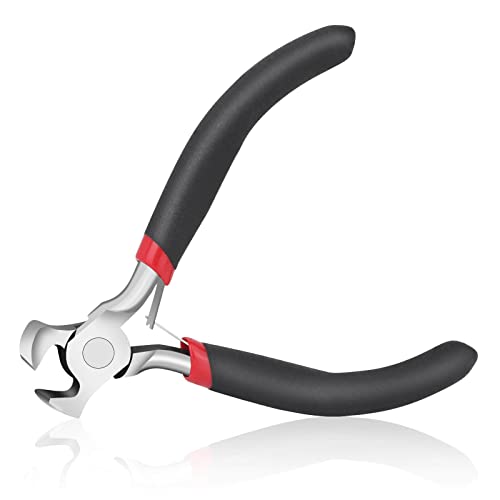
Best for: jewellery makers, hobbyists and craft workers cutting fine wire, zip ties or wicks. Skip it if: you plan to pull framing nails or shear hardened steel.
Billbotk is a different tool from the other five, and the category path on the listing shows it: jewellery pliers, not hand tools. The weight tells the story. At 2.08 oz, this pick is roughly one-tenth the mass of the HOUSERAN, and the 7.48 x 0.91 x 2.72 in body is built around fine detail work. The listing names polished jaws, a double-layer rubber sponge handle and a spring return, and pitches the tool at guitar string, zip cable ties, wood candle wicks and light wire.
That specificity is also the limit. Billbotk publishes no steel grade, no HRC figure, no warranty. That is fine for hobby work where the loads are low and the failure mode is a slow dulling of the edge rather than a snapped jaw. It is not fine for pulling nails out of joists. As the cheapest of the six and the one buyers choose most often here by sales rank, it earns its slot on price and honest scope.
Pros:
- Lightest pick at 2.08 oz
- Cheapest of the six
- Sells faster than the rest of this set
- Spring-return jaws for repeat cuts
- Aimed at fine hobby and craft work
Cons:
- No stated steel grade or HRC
- Not suited to framing nails or hardened wire
- No published warranty
- Sold under a jewellery-tool category, not hand tools
Which length suits the job in front of you?
Length is the second decision after jaw hardness, and it splits the six picks into three groups.
- 6 to 6.5 inches: KNIPEX at 6.35 in. Compact enough for tight panel work and inside cabinets.
- 7 to 7.5 inches: Bates at 7 in, DURATECH at 7.2 in, Billbotk at 7.48 in. The nail-apron sweet spot for trim, subfloor and flooring installation.
- 8 inches and up: HOUSERAN at 8 in nominal, IRWIN at 11.2 in overall. More leverage on stubborn nails and thicker wire, at the cost of tight-space access.
A 7-inch tool covers most household and finish-carpentry jobs. Step up to 8 inches when the nails are longer than 3 inches or the wire is hardened. Step down to KNIPEX's 6.35 in when the tool has to reach into places a bigger head cannot.
What the listings do not tell you
Two things matter for these tools that the product pages tend to bury.
The first is throat depth versus tip shape. End cutting pliers only pull nails cleanly when the tips can slide under the nail head. IRWIN is the only pick here that explicitly mentions wide throat clearance for semi-flush cutting of nails and rivets. The others let you infer it from photos, which is not the same thing. If you pull mostly finish nails set nearly flush with the surface, the throat matters more than the length.
The second is what "dual use" actually costs. Every pick except KNIPEX is sold as both a wire cutter and a nail puller. A jaw ground to shear wire cleanly is not the ideal shape for gripping a nail shank, and vice versa. In practice, a general-purpose plier does both to about 80% of a dedicated tool's standard. That is fine for a toolbox with one plier in it. It is worth knowing if you are choosing between two picks and one is a compromise where the other is not.
The keyword to hold on to when comparing the best end cutting pliers is fit for purpose. A jewellery-scale plier will not survive framing work, and a framing plier is clumsy on a bracelet clasp.
Are these actually the right tool for pulling nails?
For a proud nail with the head standing above the surface, yes. End cutting pliers grip the head or the shank close to the wood, and you rock the tool over its own jaws to lever the nail out. For a nail sunk flush or below the surface, the answer is different. You want a cat's paw or a dedicated pry bar, because the pliers cannot get behind the head without gouging the wood.
The Bates, DURATECH and HOUSERAN listings all name flooring installation and nail pulling in the same breath, which is exactly the profile these tools are built for. IRWIN's wide throat leans the same way. KNIPEX, sold as end cutters with binding-wire duty, is more of a wire tool that will pull a nail when asked. Billbotk is not a nail puller for anything heavier than a picture pin.
The verdict
Two tracks decide this. If your work is mostly trim, subfloor and finish nails in wood, buy the Bates Choice 7-inch nail puller. At 6.38 oz and second-cheapest here, it does what a light apron plier is meant to do without asking you to pay a premium for a warranty or a certified HRC number you will not use. If your work involves cut nails, rivets, hardened wire or daily use on site, buy the KNIPEX 68 01 160 for its limited lifetime warranty and its stated 61 HRC cutting edges, or the IRWIN 2078318 for its wider throat clearance and induction-hardened edges. The cutoff between the two tiers is honest: if you use these best end cutting pliers weekly, the premium tools pay back their price position within a year. If you use them monthly, the Bates is the smart default. HOUSERAN is the flanker choice for buyers who care most about the highest published hardness figure in this set, DURATECH is the option when you want a softer TPR handle at a mid price, and Billbotk is the answer only when the material you are cutting is smaller than a coat hanger.
FAQ
Are these end cutting pliers strong enough to cut hardened nails?
End cutting pliers strong enough for hardened nails are the ones with the highest published jaw hardness. In this set, HOUSERAN claims 63 to 65 HRC on Cr-V, and KNIPEX states approximately 61 HRC on induction-hardened edges. Those two are the picks to reach for on cut nails or hardened wire. Bates, DURATECH, IRWIN and Billbotk do not publish an HRC figure you can compare against.
Is a premium pair worth it over the cheap ones?
A premium pair is worth it when you use the tool weekly or when a jaw failure would ruin your day. KNIPEX carries a limited lifetime warranty, and IRWIN publishes induction-hardened edges on nickel chromium. Those specifications back the higher price positions in this set. For occasional home use, Bates at the entry tier does the same two jobs, and the money saved buys a decent claw hammer to go with it.
What size end cutting pliers should I buy?
What size end cutting pliers you buy depends on the job. A 7-inch tool like the Bates 7 in or DURATECH 7.2 in fits an apron pocket and handles trim, flooring and light wire. An 8-inch tool like the HOUSERAN or the IRWIN 11.2 in overall gives you more leverage on longer nails and thicker wire. KNIPEX at 6.35 in is the pick for tight electrical spaces.
Bates or KNIPEX for a working carpenter?
Bates or KNIPEX comes down to warranty and hardness. Bates is lighter at 6.38 oz, cheaper by two price ranks, and cuts wire and pulls nails in high-carbon steel. KNIPEX is heavier at 7.28 oz, carries a limited lifetime warranty and states approximately 61 HRC on induction-hardened edges. Weekly site work favours KNIPEX for the warranty. Occasional trim work favours Bates for the price and pocket weight.
What is the biggest mistake buyers make in this category?
The biggest mistake buyers make is treating end cutting pliers as a pry bar. These jaws grip a proud nail or shear wire; they cannot dig behind a flush-set nail without damaging the wood. Match the tool to the job: use a cat's paw for sunk nails and reserve the pliers for heads that already stand above the surface. That single habit doubles the service life of the jaws.
Ready to buy? Start with the Bates 7-inch if you are outfitting a home workshop or a finish-carpentry kit; it is the lightest full-size plier here and the second-cheapest, and it covers the two jobs most owners actually reach for. Step up to the KNIPEX or the IRWIN only when a warranty or a wider throat earns its keep in your week. The reason Bates wins the top slot is not that it is the fanciest tool on the page. It is that the specifications published on its listing map exactly to the work most buyers of end cutting pliers are about to do, without asking them to pay for margins they will not measure.